Service · The work guests need not notice
Service: An Evening Behind the Scenes
Good service is not simply a greater number of hands. It is a shared understanding of where people move, when decisions happen and who is responsible.
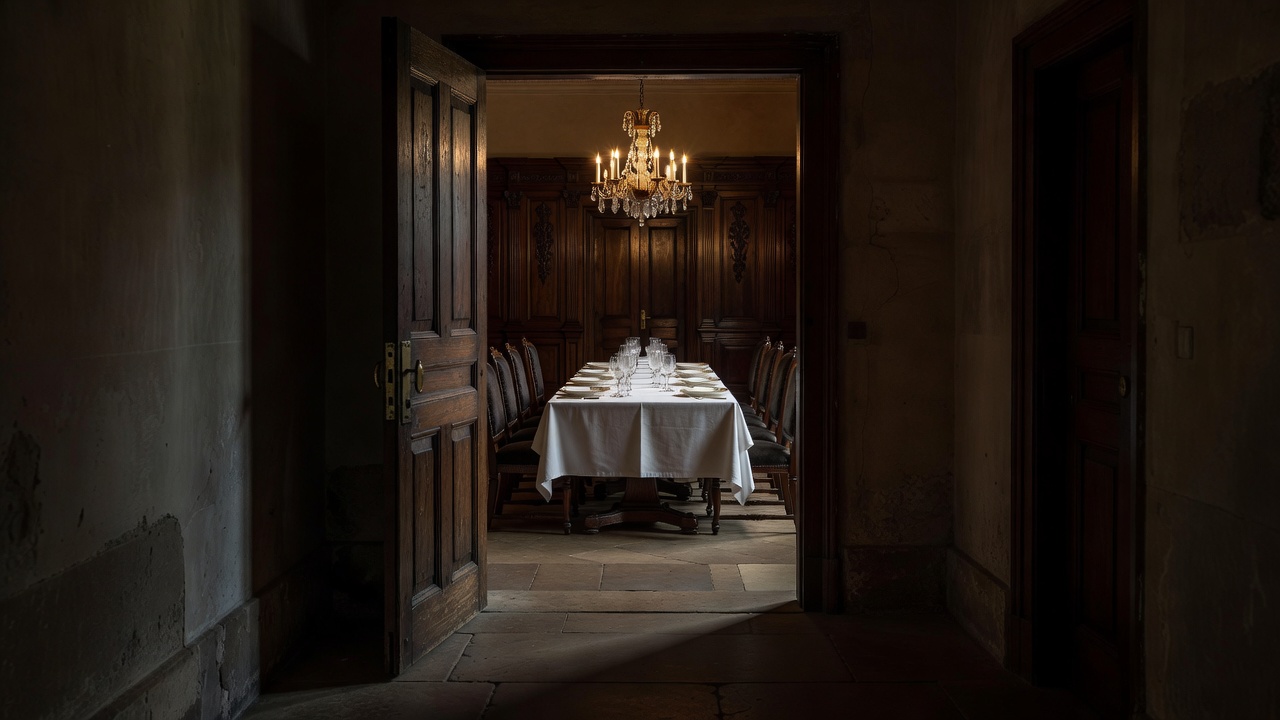
An estate dinner has two simultaneous narratives. Guests arrive, settle into conversation and sit down to eat. Behind that experience, deliveries are received, ingredients are stored, plates are warmed and used glassware returns to the kitchen. Planning these narratives together prevents the host from becoming a messenger between rooms.
The service plan need not be elaborate. A concise running order, a clear division of duties and a practical route through the house can be enough. Its purpose is to remove avoidable uncertainty while allowing the team to respond naturally to the people at the table.
01 · Before arrival
Open the house to the work
Confirm when the chef and service team can enter, where they should park and who will unlock the relevant doors. Rural approaches, gates and shared drives can complicate deliveries. Send usable directions and a contact number through your provider’s agreed channel rather than assuming a map pin is sufficient.
The first person on site should know which rooms, appliances and cupboards are available. Identify a place for coats and personal belongings that does not occupy preparation space. Agree how household activities continue during setup, especially breakfast, children’s meals and access by other contractors.
02 · Preparation
Resolve the room before guests arrive
Set the table early enough to discover missing chairs, unstable surfaces or insufficient glassware. Check that guests can sit and leave their places without colliding with a service station. Flowers, candles and menu cards should not crowd shared dishes or obstruct conversation. Follow property rules for flames and decorations.
Walk the route under the lighting conditions expected during dinner. A step that is obvious in daylight may become difficult after sunset. Confirm accessible entry, nearby facilities and a comfortable seating arrangement with the guests concerned. Do not ask the service team to improvise accessibility at the moment of arrival.
03 · Reception
Give arrivals their own attention
Welcoming guests and finishing the first course compete for attention if the same person must do both. Decide who opens the door, receives coats, offers drinks and guides late arrivals. If drinks are served away from the dining room, establish where glasses are collected and how guests are invited to the table.
Confirm who handles wine, alcohol-free options, water and replenishment. A drinks station needs storage, suitable glassware and somewhere for used items. If guests bring bottles, agree who decides when they are opened; otherwise a well-meant gift can disrupt the planned sequence or overwhelm limited chilling space.
04 · At the table
Use signals, not interruptions
One service lead should coordinate with the chef. That person can confirm when guests are seated, whether a speech is continuing and when the table is ready for the next course. Without a shared signal, food may be plated too early or the host may be repeatedly drawn away from conversation.
Discuss the desired pace, but avoid promising exact course times regardless of circumstances. Late arrivals, guest needs and kitchen conditions can change the sequence. Agree who may authorise an adjustment. Dietary plates should be identifiable to the relevant staff without announcing a guest’s private information across the room.
05 · A change of plan
Prepare the indoor version
Outdoor dinners in the Luberon, Chianti or the Dordogne can still encounter wind, rain or an unexpectedly cool evening. A covered terrace is not automatically a safe or comfortable fallback. Check shelter, lighting, power, table stability and the distance food must travel. Never rely on improvised heating or electrical arrangements.
Set a decision point for moving inside before the table is fully dressed. The person making that decision needs both the property’s agreement and the service team’s practical assessment. A fallback works only if the indoor room is available, adequately furnished and not already committed to another activity.
06 · After the final course
Close with the same care
Agree whether coffee, drinks and clearing continue after the formal meal. Staff departure times should be understood, along with any charges or restrictions for extending them. Guests may remain at the table while a discreet portion of clearing happens, but noisy washing-up or equipment collection may need a different sequence.
Ask the chef to direct the handling of leftovers, including whether food can safely be retained. Label and store only as advised. Complete an equipment check, separate property items from hired stock and confirm who locks up. The following morning should begin with a usable house, not unresolved questions about bins, missing plates or collection access.
A running order worth sharing
- Access and delivery arrangements confirmed.
- Kitchen and dining room handed over.
- Staff briefing and guest requirements reviewed.
- Reception, seating and course signals agreed.
- Final clearing and property handover completed.
This sequence is a planning framework, not a staffing formula. Ask the chef and service provider to propose the team appropriate to the menu, house and guest needs. Then carry the agreed scope into the booking paperwork, where practical intentions become clear commitments.
Check the commitments